Types of Knife Sharpening: A Complete Guide
Everything you need to know about keeping your knives sharp
When it comes to keeping your knives sharp, you have two main options: manual sharpening or machine sharpening. Each method has its own benefits and is suited for different types of knives and situations. Understanding these methods will help you make the best choice for your kitchen tools. In this guide, we'll explain everything you need to know in simple terms.
Manual Sharpening: Traditional Craftsmanship
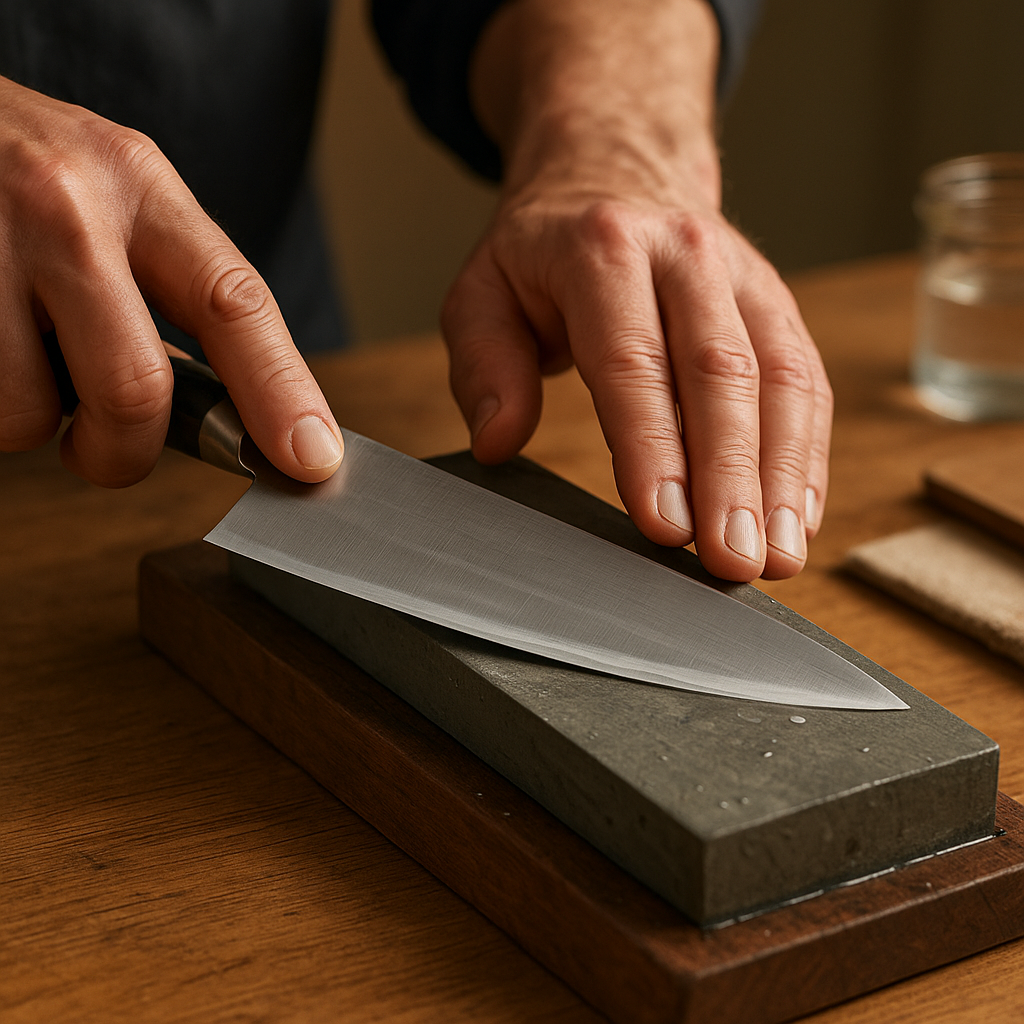
Manual sharpening is the traditional method that has been used for centuries. It involves using handheld tools like whetstones, water stones, or honing steels to sharpen knife blades. This method gives the sharpener complete control over the angle and pressure, resulting in a precise and customized edge.
Toning Stones (Whetstones/Water Stones)
Whetstones, also called water stones, are rectangular blocks of abrasive material. They require water to create a smooth sharpening surface. The knife is drawn across the stone at a consistent angle, removing small amounts of metal to create a sharp edge.
Pros
- Maximum control over sharpening angle
- Creates very sharp, precise edges
- Long-lasting results
- Suitable for all knife types
- Can achieve various edge finishes
Cons
- Requires practice and skill
- Takes more time (10-20 minutes per knife)
- Learning curve for beginners
- Needs regular maintenance of stones
Honing Steels (Musates)
Honing steels are long, cylindrical rods made of steel, ceramic, or diamond-coated material. They don't actually sharpen the blade but realign the edge and remove tiny burrs. Regular honing keeps knives sharp between proper sharpenings.
Pros
- Quick and easy to use
- Maintains edge between sharpenings
- Extends time between full sharpenings
- Safe for regular home use
- Affordable and widely available
Cons
- Doesn't remove metal to create new edge
- Won't fix severely dull or damaged knives
- Needs proper technique to be effective
- Should be used regularly for best results
Ceramic Stones
Ceramic sharpening stones are made from compressed ceramic particles. They work dry or with water and offer a consistent abrasive surface. They're excellent for maintaining already sharp edges and are more durable than traditional water stones.
Pros
- Very durable and long-lasting
- Works well for regular maintenance
- Creates smooth, sharp edges
- Doesn't require oil or water
- Easy to clean and store
Cons
- Can be more expensive initially
- Less aggressive than diamond stones
- May require more time for heavily dull knives
- Can wear unevenly over many years
Best for: Kitchen knives, hunting knives, pocket knives, barber knives, fillet knives
Machine Sharpening: Fast and Efficient
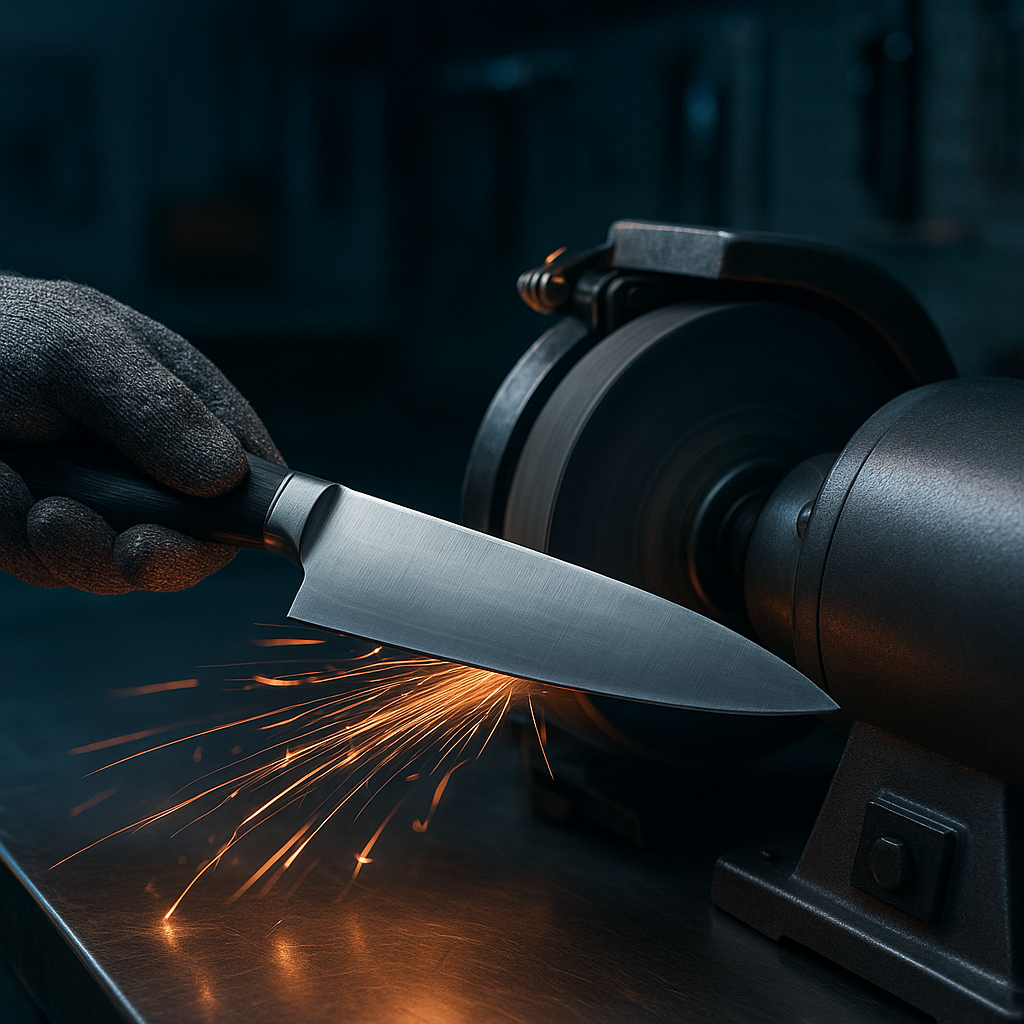
Machine sharpening uses electric or mechanical devices to sharpen knives automatically. These machines have rotating wheels or belts with abrasive surfaces that do the sharpening work. They're designed to be faster and easier to use than manual methods.
Electric Sharpeners
Electric sharpeners are countertop devices with one or more rotating wheels. You simply draw the knife through guided slots, and the machine does the work. They're designed for home use and offer a balance of speed and ease.
Pros
- Extremely fast (2-5 minutes per knife)
- Very easy to use
- Consistent results every time
- No special skills required
- Great for regular home maintenance
Cons
- Removes more metal than manual methods
- Can shorten knife lifespan if overused
- Less control over angle
- Not suitable for delicate or specialty knives
- Electric motors can wear out
Professional Sharpening Systems
Professional-grade sharpening stations use controlled belt systems with various grits. They're used by knife experts and can create extremely precise edges. These systems allow for consistent angles and professional results.
Pros
- Professional-grade precision
- Consistent results every time
- Handles high volume efficiently
- Multiple grit options for different results
- Adjustable angle settings
Cons
- Expensive for home use
- Requires training to operate properly
- Takes up counter space
- Can remove too much metal if misused
- Not portable
Best for: Standard kitchen knives, restaurant knives, hunting knives (rough work), food service knives
Understanding Sharpening Angles
The sharpening angle determines how sharp and durable your knife will be. Lower angles create sharper but less durable edges, while higher angles create more durable but less sharp edges.
| Knife Type | Sharpening Angle | Description |
|---|---|---|
| Vegetable Knives | 10-15° | Extremely sharp for precise vegetable work |
| Fillet Knives | 10-17° | Extremely flexible and sharp for fish |
| General Use Kitchen Knives | 15-20° | Sharp and versatile for everyday cutting |
| Barber Knives | 15-20° | Very sharp for precise hair cutting |
| Pocket Knives | 17-22° | Balance of sharpness and durability |
| Meat Knives | 20-25° | Durable edge for cutting through bones |
| Hunting Knives | 20-25° | Durable for field dressing and processing |
| Bread Knives | 20-25° | Serrated edge maintains cutting ability |
Tip for homemakers: Most standard kitchen knives work best at around 17-20 degrees. If you're unsure what angle your knife needs, bring it to a professional sharpener who can determine the best angle based on your knife's original edge.
Manual vs Machine Sharpening: Which is Right for You?
| Criteria | Manual Sharpening | Machine Sharpening |
|---|---|---|
| Time | 10-20 minutes | 2-5 minutes |
| Difficulty | Requires skills | Easy to use |
| Angle Control | Full control | Limited/fixed |
| Blade Longevity | Maximum | Medium (more metal removed) |
| Tool Cost | $20-200+ | $30-300+ |
| Suitable For | All knife types | Standard kitchen knives |
| Result Quality | Professional | Good for home use |
| Learning Curve | Requires practice | Minimal |
Conclusion
Both manual and machine sharpening have their place in knife care. For best results, many knife owners use a combination: regular honing with a steel for maintenance and periodic professional sharpening to restore the edge. If you have valuable or specialty knives, manual sharpening by a professional is often the best choice. For everyday kitchen knives, electric sharpeners can be a convenient option.
Remember, a sharp knife is safer than a dull one - it requires less pressure to cut, reducing the risk of slips and accidents.